
Clinical Anatomy

Shahram Mafazi
(IMG-PDD)
Dermatology-Trained Aesthetic Medicine Educator
- Speaker in IMCAS & Kolkhida world Congress
- International faculty of Aptos Global
- International faculty of IAAM
- Promoitalia (Happy Lift, Assuifil)
- Meditronic (Thread Lift)
- Aptos Global (Thread Lift)
- International Association of Aesthetic Medicine, Canada
- International Zone for Education in New Cosmetic Arts, CA
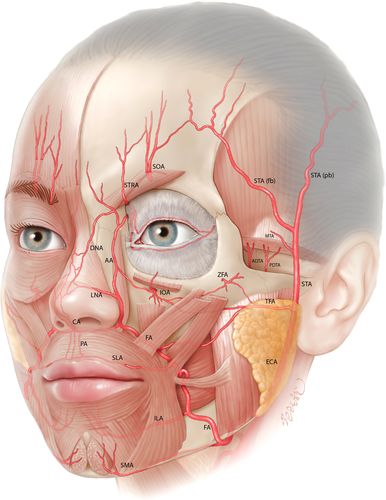
Clinical Anatomy
A comprehensive clinical anatomy course designed specifically for aesthetic medicine. This program builds a layered, spatial understanding of facial anatomy, from skin to bone, to support safe injection practice, accurate technique execution, and complication prevention. Emphasis is placed on structures with direct relevance to injectables, threads, and minimally invasive procedures.
- Level Foundation
- Category
- Estimated study time ~8 Hours
- Format Virtual (Interactive LMS)
Learning Objectives
- Identify key layers of facial tissue in aesthetic zones
- Understand retaining ligaments and their clinical importance
- Locate motor & sensory nerves relevant to injection safety
- Map the facial arteries and veins with high complication risk
- Review the parotid gland, facial muscles, and bony landmarks
- Analyze the clinical anatomy of the nose in relation to filler techniques
Curriculum Structure
- Module 1 – Facial Tissue Layers
Skin, subcutaneous tissue, SMAS, deep fat, periosteum. - Module 2 – Retaining Ligaments
Structural support, aging implications, and procedural relevance. - Module 3 – Sensory Nerves
Pain pathways and risk avoidance. - Module 4 – Motor Nerves
Facial expression muscles and functional preservation. - Module 5 – Facial Arteries
High-risk vascular anatomy and danger zones. - Module 6 – Facial Veins
Venous pathways and clinical implications. - Module 7 – Parotid Gland
Anatomical boundaries and procedural considerations. - Module 8 – Facial Muscles
Mimetic muscle anatomy relevant to injectables. - Module 9 – Bony Landmarks of the Skull
Surface anatomy and depth orientation. - Module 10 – Clinical Anatomy of the Nose
Vascular, structural, and safety considerations for nasal procedures.
Assessment & Certification
- Interactive scenario-based quizzes throughout the course
- Final assessment quiz (minimum score: 70%)
- IZENCA Certificate of Completion (Digital)
Course Features
- 100% online, self-paced learning
- Advanced LMS with progress tracking
- Multi-device access
- Secure viewing (no downloads or printing)
Requirements
- Basic medical background (MD, DDS, RN, NP, or equivalent)
- Completion of Aesthetic Terminology is recommended prior to enrollment
Program Access & Enrollment Options
Designed for flexibility and continuous professional development
Secure LMS • Certificate awarded upon completion
Most Popular Choice
Annual License
1 Year Access
$575 CAD
/ access
(Equivalent to $47.92/month)
(Equivalent to $47.92/month)
- One-Time Payment
- Learn anytime, anywhere
- 24/7 access